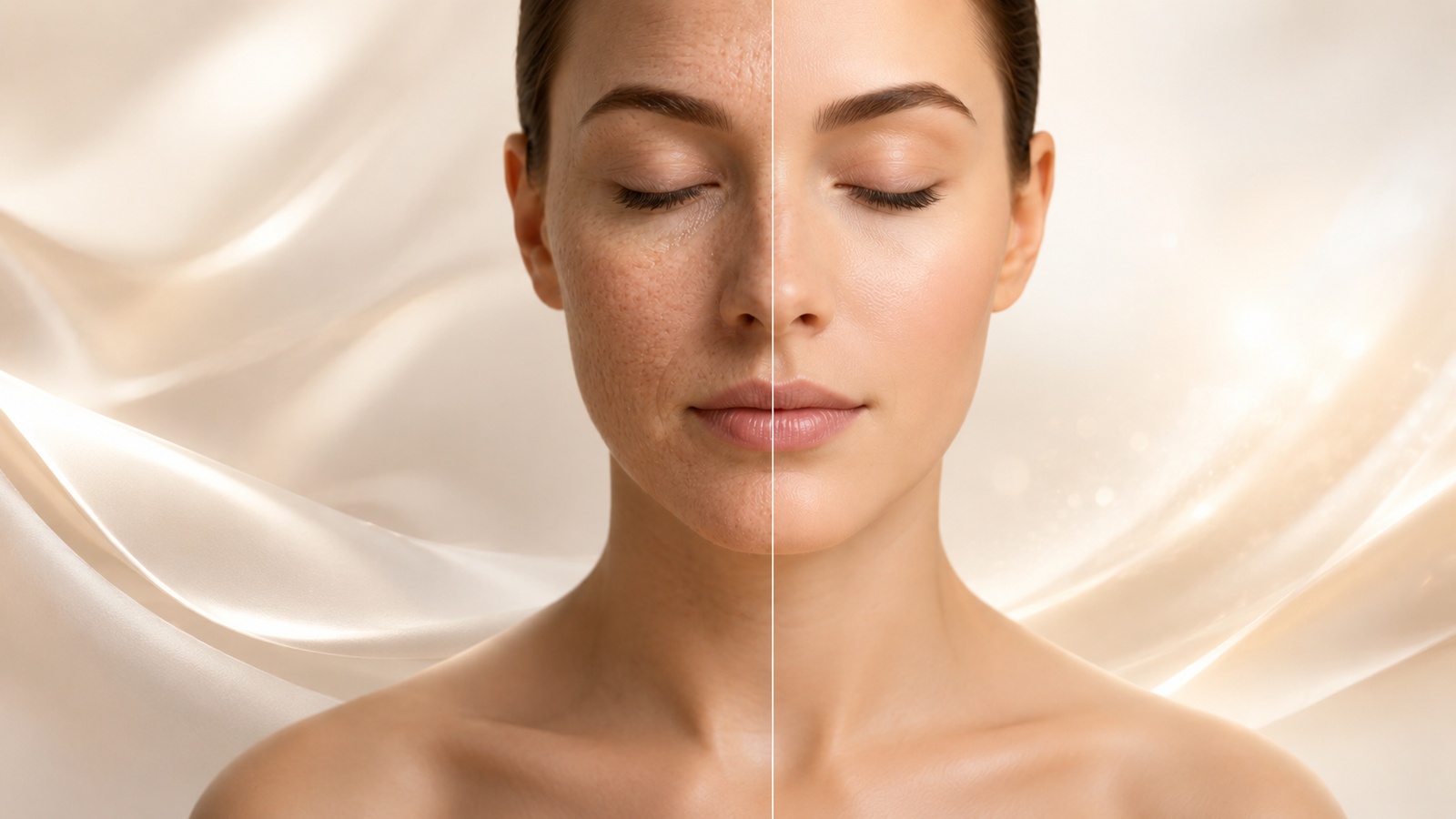
African Botanics Resurfacing Mask Review: Textural Transformation Without the Inflammatory Aftermath
A resurfacing mask is one of those products that can sound more dramatic than it feels. The word “resurfacing” suggests an instant reset, while the real experience is usually quieter: skin may feel smoother after rinsing, makeup may sit more evenly, and the surface may look less dull over time. The other side of the equation is irritation. A product can leave skin polished and still be too aggressive for the way it is being used.
African Botanics Infinité Resurfacing Mask sits in that interesting middle ground between a traditional face mask and an exfoliating treatment. Its formula is built around acids, fruit enzymes, botanical extracts, humectants, and conditioning ingredients rather than a simple clay base. That makes the application and the aftercare more important than the word “glow” on a product page.
This review looks at the mask as a routine decision: what the texture is trying to do, how to introduce it without overworking the skin, what changes are realistic to notice, and who should be more cautious. The most useful result is not a dramatic one-night transformation. It is a smoother-feeling surface without a cycle of tightness, stinging, or rebound dryness afterward.
What Kind of Product Is This?
The Infinite Resurfacing Mask is better understood as a multi-active exfoliating treatment than as a basic moisturizing mask. The published ingredient information includes lactic acid, glycolic acid, phytic acid, fruit enzymes from pineapple and papaya, white willow bark, niacinamide, panthenol, hyaluronic acid, aloe, and a range of botanical extracts and oils. Ingredient lists can change, so the packaging should always be the final reference before use.
That combination explains why the mask may address several texture concerns at once. Acids and enzymes can help loosen the buildup that makes the surface feel rough, while humectants and soothing or conditioning ingredients can make the treatment feel less stark than a strong peel. It does not mean that every skin type will have the same response, and it does not turn the product into a treatment for a medical skin condition.
The formula also contains fragrant botanical oils and multiple plant extracts. That may be part of the sensory appeal, but it is relevant for reactive skin. Natural does not automatically mean non-irritating, and a formula can be elegant while still requiring a careful introduction. This is a product to approach with attention rather than enthusiasm alone.
How the Texture Fits Into a Routine
A mask has a different rhythm from a leave-on acid. You apply it, allow the formula to work for the instructed time, and rinse it away. That can make the experience easier to control, but it does not make the active ingredients irrelevant. The amount used, the contact time, the condition of the skin, and what is applied afterward all influence the final result.
The texture should be judged in two stages. First, notice how it spreads and whether it stays comfortable while it is on the face. Second, notice how the skin feels after rinsing and after moisturizer has been applied. Immediate smoothness is useful, but a tight or hot feeling that persists into the evening is a sign that the routine needs to be reduced or stopped.
I would not use a resurfacing mask immediately before an important event for the first time. Even a well-designed product can reveal individual sensitivity, especially around the nose, mouth, cheeks, or areas that have recently been shaved or exposed to wind. The first trial belongs on a quiet evening when the skin can be observed without pressure.
What the First Use May Feel Like
With a formula that includes exfoliating acids and aromatic plant ingredients, a mild tingle may be noticeable. Mild and brief is different from intense burning, itching, swelling, or pain. A strong reaction is not evidence that the product is working better. Rinse it off if the sensation becomes uncomfortable, and do not try to push through a reaction in the hope of a faster result.
After rinsing, the most realistic early change is a cleaner, smoother feel. Dry patches may look less prominent because the surface has been softened and hydrated. Foundation or tinted moisturizer may apply more evenly if uneven flakes were the problem. These are useful observations, but they are not the same as permanent changes in pigmentation, scars, or wrinkles.
The next morning is often more informative than the first five minutes. Does the skin feel calm, or does it feel tight and unusually sensitive? Is there a comfortable brightness, or only a temporary polished look? A product earns a place in a routine when the skin remains balanced after the treatment, not when the first impression is dramatic.
How to Introduce It Without Overdoing Exfoliation
Start with clean, dry skin and use the directions on the current packaging. Apply a thin, even layer rather than trying to make the mask work harder by applying a thick coat. Keep the first use shorter if the brand directions allow flexibility, and avoid the eye area, lips, broken skin, and any place that is already irritated.
Do not pair the first application with a collection of other active products. Using a retinoid, exfoliating toner, scrub, acne treatment, and resurfacing mask on the same evening makes it impossible to know what caused a reaction. A simple routine gives the skin a fair test and makes any problem easier to trace.
Frequency should follow the skin’s response rather than a desire to accelerate the result. If the skin is comfortable, the product can be used according to the manufacturer’s directions. If dryness, persistent redness, or sensitivity appears, take a break and simplify the routine. Sensitive or recently compromised skin may need much less frequent use or may not be a good match at all.
Cleanse Gently Before the Mask
A clean surface helps a treatment behave more predictably, but a harsh cleanse is not an advantage. The goal is to remove sunscreen, makeup, sweat, and surface residue without leaving the skin stripped before the acids and enzymes are applied. If the face already feels squeaky or tight after cleansing, the preparation step is too aggressive.
A cream cleanser can make sense for dry or easily irritated skin because it keeps the pre-treatment routine calm. It is also useful when the mask is being used after a day of makeup or sunscreen and the skin needs a thorough but comfortable first step. Rinse completely and pat dry rather than rubbing with a towel.
Where the Mask May Help With Texture
Texture is not one problem. It can mean dry flakes, congestion, roughness around the nose, uneven makeup application, or the general dullness that appears when the surface is not shedding evenly. A resurfacing formula may be more noticeable for some of these concerns than others.
For dry surface roughness, hydration and gentle exfoliation need to work together. If the mask removes surface buildup but the routine afterward contains no moisturizer, the result may feel clean but tight. For congestion, the mask may make the surface feel clearer, but it should not be treated as a substitute for a dermatologist’s plan if breakouts are persistent, painful, or worsening.
For uneven tone, patience matters. An exfoliating product may make the skin look brighter because light reflects more evenly from a smoother surface, but it cannot guarantee the removal of dark spots. Repeated irritation can make uneven tone look worse in some people, which is another reason to favor a slow, comfortable routine.
| Concern | What may improve | What not to expect |
|---|---|---|
| Dry surface flakes | Smoother feel and more even product application when followed by moisturizer | A permanent fix if the underlying routine is too drying |
| General dullness | A fresher-looking surface after gentle use and consistent care | An instant replacement for sleep, hydration, or sun protection |
| Congested texture | A cleaner-feeling surface for some users | A guaranteed solution for acne or persistent clogged pores |
| Uneven tone | A more uniform-looking finish over time for some skin types | Guaranteed removal of pigmentation or post-inflammatory marks |
The “Without the Inflammatory Aftermath” Question
The title of this review asks an important question, but no exfoliating mask can promise that every person will avoid inflammation or irritation. Skin can react to acids, enzymes, fragrance components, preservatives, plant extracts, or simply to applying too many active products too close together.
A more honest test is whether the routine can be adjusted to keep the skin comfortable. Patch testing, shorter initial contact, less frequent use, gentle cleansing, and a plain moisturizer all reduce the number of variables. If the skin still becomes hot, swollen, intensely itchy, or persistently red, the product should be discontinued and professional advice considered.
People with eczema, rosacea, a damaged skin barrier, active dermatitis, recent procedures, or prescription treatments should be particularly cautious. A product marketed as botanical or luxurious is still an active cosmetic formula. When the skin is already reactive, a simpler routine is often the better experiment.
What to Apply After Rinsing
After a resurfacing mask, the skin usually benefits from quiet, supportive care. Rinse thoroughly with lukewarm water, pat dry, and apply a moisturizer that you already know your skin tolerates. This is not the best night to test a new fragrance-heavy serum, a strong retinoid, or another exfoliant.
A nourishing serum can be useful if it is familiar and non-irritating, but more products are not automatically better. Hydration is the priority. Look for a routine that leaves the skin comfortable and flexible rather than glossy for a few minutes and tight later.
The following day, use sunscreen if you will be outdoors. Exfoliation can make the skin more vulnerable to the visible effects of sunlight, and sun protection also helps prevent the uneven tone that many people are trying to improve in the first place.
Ingredients Worth Understanding
Lactic, glycolic, and phytic acids
These acids are part of the resurfacing story, but their presence does not tell you how strong the final experience will be. Concentration, pH, contact time, the rest of the formula, and the condition of the skin all matter. The same ingredient can feel completely different in two products.
Pineapple and papaya enzymes
Fruit enzymes are often used in exfoliating formulas to support a smoother surface. They can contribute to the overall active feel of the mask, which is why combining this product with several other exfoliants is a poor first experiment.
Humectants and conditioning ingredients
Glycerin, hyaluronic acid, panthenol, aloe, and plant oils can help the formula feel less stark and support a more comfortable finish. They do not cancel the activity of the acids, but they explain why a resurfacing mask can also feel more nourishing than a simple peel.
Botanical extracts and aromatic oils
These ingredients are part of the brand’s sensory and botanical identity. They may be pleasant for one person and a source of sensitivity for another. Read the full list if you already know that your skin reacts to fragrance, essential oils, or specific plant extracts.
When Not to Use It
Skip the mask when the skin is sunburned, freshly waxed, scraped, cracked, or unusually tender. Also pause if a different product has already caused irritation. Applying an exfoliant to a compromised surface can turn a manageable problem into several days of discomfort.
Be careful around shaving and hair removal. Even if the skin looks normal, the barrier can be more sensitive immediately afterward. Give it time to settle before using an active mask, especially around the upper lip, jawline, or cheeks.
Do not use the mask as a way to compensate for an aggressive routine. If the skin is already dry from a cleanser, retinoid, acne treatment, cold wind, or frequent exfoliation, the right response is usually to simplify. A treatment should fit into a healthy routine rather than rescue an overloaded one.
Calm, intact skin, a simple cleanser, a quiet evening, and enough time to observe the reaction afterward.
Apply gently and do not scrub harder to chase a faster result. Mechanical friction can change the treatment completely.
Use moisturizer and sun protection, and avoid stacking more exfoliating products immediately afterward.
Burning, swelling, hives, intense itching, or persistent redness is a reason to rinse and discontinue use.
How It Compares With a Glycolic Booster
A mask and a leave-on booster should not be treated as interchangeable steps. A booster can remain on the skin and may be intended for a more regular treatment pattern, while a mask is applied and removed. Combining both in the same evening increases the active load and makes irritation more likely.
If you already use a glycolic product, alternate rather than layer until you understand how your skin responds. The goal is a routine you can maintain. A gentle mask used occasionally may be more useful than an ambitious schedule that leaves the skin too sensitive to tolerate anything else.
For anyone considering the product because of visible texture, take photographs in the same light over several weeks rather than judging the result in a mirror immediately after rinsing. That makes it easier to separate temporary smoothness from a genuine improvement in how the surface looks and feels.
What a Fair Review Should Measure
A good review of this type of mask should go beyond whether the skin looks bright after one use. I would track four things: the feel immediately after rinsing, the condition of the skin the next morning, the way makeup or moisturizer applies, and whether the routine can be repeated without accumulating dryness.
The mask is more convincing if the skin feels refined but not stripped, if any glow looks natural rather than tight, and if the result holds up after the next cleanse. It is less convincing if the first use is dramatic but followed by flaking, tenderness, or a need to stop all other products for a week.
That is also why the phrase “inflammatory aftermath” matters. The absence of discomfort is not a small detail. It is part of the performance. A resurfacing product should fit the user’s tolerance, not demand that the user tolerate a reaction as proof of effectiveness.
Frequently Asked Questions
Is the African Botanics Resurfacing Mask suitable for sensitive skin?
It may be too active for some sensitive or reactive skin because the formula includes exfoliating acids, enzymes, botanical extracts, and aromatic ingredients. Patch testing and cautious introduction are important, and a dermatologist can help if the skin is reactive or being treated for a condition.
How often should I use the mask?
Follow the current product directions and let the skin’s response guide the schedule. Start conservatively, avoid using it alongside other strong actives, and reduce or stop if dryness, stinging, or persistent redness appears.
Can I use it with retinol or another acid?
Using several active exfoliating products together can increase irritation. Until you know your tolerance, use the mask on a separate evening from retinoids, acid toners, strong acne treatments, or other peels.
Will it remove dark spots?
It may help the skin look more even over time for some users, but no cosmetic mask can guarantee removal of pigmentation. Sun protection and a consistent routine are more important than a single intense application.
Should I moisturize after the mask?
Usually, yes. After rinsing, use a moisturizer that your skin already tolerates. Keeping the post-treatment routine simple makes it easier to maintain comfort and identify any reaction.
What if the mask burns?
Rinse it off promptly and do not try to continue through significant burning, swelling, intense itching, or pain. If the reaction is severe or does not settle, seek medical advice.
Final Verdict
African Botanics Infinité Resurfacing Mask is appealing because it treats texture as a layered problem rather than relying on one abrasive ingredient. The formula combines exfoliating acids and enzymes with hydrators, botanical extracts, and conditioning ingredients, creating a treatment that can feel more refined than a basic scrub.
Its weakness is the same as its appeal: there is a lot happening in one formula. The product deserves a careful introduction, especially for sensitive skin or anyone already using retinoids and acids. The most convincing result is not a dramatic sting or an instant promise of perfect skin. It is a smoother surface, comfortable skin the next day, and a routine that can be repeated without an inflammatory aftermath.
Check availability, prices, coupons, and offers on the Alyaka coupons and deals page, then verify the latest ingredient list and directions on the product packaging.