Miulee Curtains Review: An Honest Opinion After Real Use
Curtains are easy to judge by color and difficult to judge by the window. A fabric can look beautiful in a product photograph but feel too thin in a bedroom, block less light than expected, or hang awkwardly because the length was measured from the wrong point. That is why Miulee is best considered as a range of different curtain styles rather than one single look or level of performance.
After living with curtains in several rooms, I find the useful questions are practical ones: how much light do they remove, what kind of privacy do they provide after dark, how do they hang, and how much work is involved when they need cleaning? This review looks at Miulee through those everyday details, including blackout, sheer, linen-textured, and velvet options.
Why Miulee Curtains Are Easy to Like at First
Miulee covers a wide range of home styles without forcing every room into the same visual language. There are plain panels for a quiet bedroom, textured linen-look options for a more relaxed living room, sheer curtains for softened daylight, and velvet styles when the room needs more weight and depth.
That variety is helpful, but it also means the brand name alone does not tell you how a curtain will behave. A sheer panel and a thermal blackout panel can both be described as Miulee curtains while serving completely different purposes. Fabric, lining, header style, panel count, and finished measurements matter more than the logo.
First Look at the Current Miulee Options
The current selection includes several useful contrasts. A custom thermal insulated blackout pair is aimed at stronger light control, a white privacy sheer pair is intended to diffuse daylight, and the linen privacy panels offer texture with a softer level of coverage. The navy velvet option adds a heavier, more decorative finish with room-darkening and thermal features.
These are not interchangeable products. The right choice depends on whether the room needs sleep-friendly darkness, daytime privacy, visual softness, insulation, or simply a more finished window. The product cards below show current availability, images, pricing, and any available offer details for each style.
Blackout Curtains in a Bedroom: What to Expect
Blackout curtains can make a noticeable difference in a bedroom, especially when the window faces a bright street, an early sunrise, or a neighboring building. They reduce the intensity of light across the room and make it easier to create a darker sleep environment. They do not automatically create perfect darkness, because light can still enter above the rod, below the hem, or through the side edges.
The current MIULEE Custom Thermal Insulated Blackout Curtains are a useful example of the type. The product is sold as two panels and is designed around thermal insulation and light blocking. Before buying, confirm the finished width and length, then decide whether the pair will cover the entire rod with enough fullness. Flat, stretched panels usually look less substantial and can leave more gaps than a properly gathered pair.
Thermal lining can also change how the room feels. It may help reduce the direct effect of a hot window in summer and a cold window in winter, but it is not a substitute for good insulation or a properly sealed frame. Think of the curtains as one layer in the room’s comfort rather than a guaranteed reduction in energy costs.
Small blackout details that make a big difference
Measure the curtain rod or track, not only the glass. The total panel width should allow for a natural gather.
A rod mounted close to the ceiling or inside a pelmet can reduce the strip of light above the curtain.
Wider rods and wraparound returns help prevent bright side leaks in bedrooms.
Decide whether the panels should skim the floor, break slightly, or stop below the sill before ordering.
Sheer Curtains and Daytime Privacy
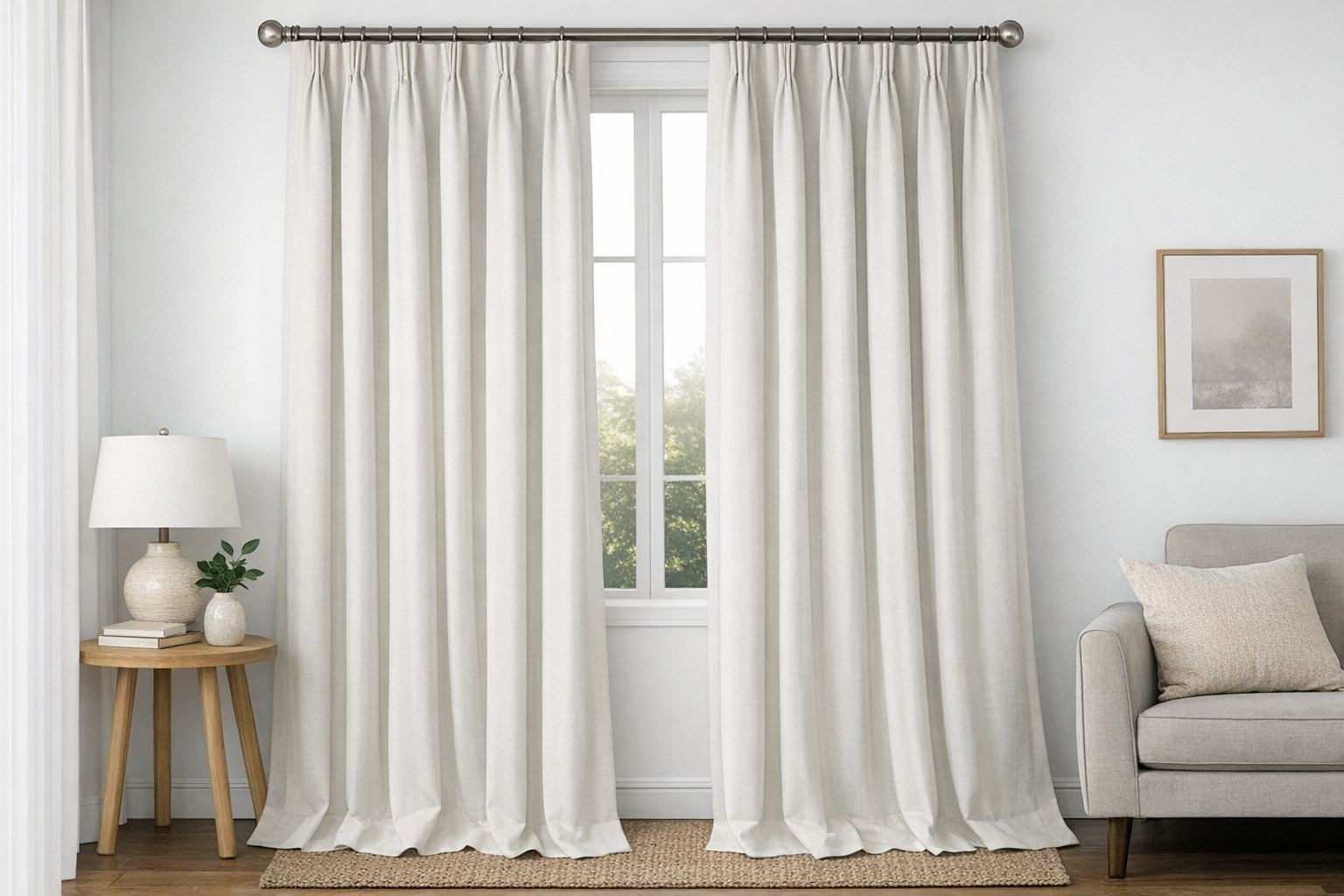
Sheer curtains solve a different problem. They keep a room connected to natural light while reducing glare and making the window feel less exposed during the day. They are particularly useful in living rooms, dining areas, and home offices where full blackout would make the space feel closed in.
The current MIULEE Light Filtering White Privacy Sheer Curtains are a straightforward example: two light-colored panels intended to soften sunlight and provide a degree of privacy. White sheer fabric can make a small room feel larger and brighter, but the privacy effect changes with the light outside. During the day, a bright exterior generally makes it harder to see in. At night, indoor lights can reverse that relationship, so sheer curtains should not be treated as a complete privacy solution after dark.
Sheer panels also reveal more about the window and the wall behind them. If the glass is uneven, the sill is cluttered, or the rod is mounted too low, the lighter fabric will not hide those details as effectively as a heavier curtain. A clean rod, balanced panel width, and carefully chosen length matter more with sheers than many buyers expect.
Linen-Textured Panels: Soft Light Without a Bare Window
Linen-look curtains sit between sheer and blackout styles. They add visible texture and soften the window without making the room as dark as a lined panel. The current MIULEE Non-See-Through Privacy Linen Curtains are listed as two panels with a back-tab header and a light-filtering, semi-sheer construction.
This kind of curtain is appealing in a living room or bedroom where you want daylight but do not want the window to feel completely open. The textured surface can also be more forgiving than a perfectly smooth white sheer because it adds visual depth and disguises minor wrinkles.
The phrase “non-see-through” still needs context. It generally describes daytime privacy at a normal viewing distance, not a guarantee that the room cannot be seen from every angle or under every lighting condition. Stand inside the room at night with the lights on and test the panels before relying on them for privacy.
Velvet Curtains: More Weight, More Presence
Velvet changes the feeling of a room quickly. It absorbs more visual attention than a plain cotton-look panel and can make a bedroom, nursery, or home theater feel warmer. The current MIULEE navy blue pom pom velvet option is a 96-inch, two-panel style with a rod-pocket header, blackout and thermal features, and decorative trim.
The decorative edge makes this style less neutral than a plain solid panel, but that can be the point. It brings a playful detail to a child’s room or nursery and gives a media room a more finished frame. Navy also works well with white, warm wood, light gray, and muted gold accents.
Heavy-looking curtains need a little more attention during installation. Make sure the rod and brackets can support the full weight, particularly when the panels are gathered to one side. A rod pocket gives a soft, traditional appearance, but it is usually slower to open and close than grommets or a smoothly gliding track.
Fabric Feel, Drape, and the First Few Days
New curtains often arrive folded tightly, so the first impression can be misleading. Creases in the packaging do not necessarily mean the fabric will hang badly. Give the panels time to relax after hanging, then use the care-label method for removing stubborn folds. A gentle steam from a safe distance is often more useful than aggressive ironing, especially for lined or velvet fabrics.
The way a curtain hangs depends on more than fabric quality. A panel with too little width will look stretched. A panel that is much longer than the room needs can pool heavily on the floor. Header style also changes the top line: rod pockets create a softer gathered look, grommets create larger regular folds, and back tabs keep the rod less visible while allowing a relatively clean fall.
Look at the curtains at different times of day. Morning light can reveal thin areas that are not obvious in the afternoon. Evening lamps can show whether a “privacy” fabric is opaque enough for your room. This quick check is more useful than judging the panels only against a bright product photograph.
Installation: Measure the Window, Then Design the Look
Good installation begins with deciding whether the goal is to cover the glass or frame the whole wall. Mounting the rod a little wider and higher than the window can make the window appear larger, but the brackets need to remain secure and clear of trim, blinds, and window handles.
- Measure the width of the rod or track and decide how much fullness you want.
- Measure from the actual hanging point to the floor, sill, or chosen stopping point.
- Confirm whether the package contains two panels and whether the listed width is per panel or for the pair.
- Check the header style against the rod diameter and the way you want the panels to open.
- Hang the curtains, let the fabric settle, and then adjust the hem or tiebacks if necessary.
A common mistake is buying the correct length but not enough total width. Curtains need extra fabric to form folds when closed and to stack neatly when open. If you want a fuller, more tailored look, calculate width from the rod rather than matching the glass measurement one-for-one.
Light, Noise, and Temperature: What Curtains Can and Cannot Do
| Curtain type | Best at | Not the best choice for |
|---|---|---|
| Blackout or thermal lined | Reducing bedroom light, glare, and the direct effect of a bright or cold window | A totally dark room when there are large gaps around the window |
| White sheer | Diffusing daylight and softening the view while keeping a room bright | Night-time privacy with indoor lights on |
| Textured linen-look | Adding natural texture and moderate privacy without closing off daylight | Complete blackout or strong sound isolation |
| Velvet blackout | Adding visual weight, room darkening, and a warmer decorative feel | Very light minimalist rooms or small rods that cannot support heavier panels |
Curtains can reduce glare and change the way a room feels, but they do not make a window soundproof. They may soften the impression of traffic noise by adding another layer between the room and the glass, yet gaps, thin windows, and outside construction will still be noticeable.
Cleaning and Everyday Maintenance
The easiest curtains to live with are the ones that can be cleaned without a complicated routine. Always follow the label for the specific panel, because a washable sheer and a lined velvet curtain may have very different instructions.
Use a vacuum attachment or a soft brush rather than pulling at the fabric or trim.
Cold or gentle cycles are safer for color, lining, and elastic components than hot aggressive washing.
High heat can shrink fabric or damage coatings. Rehang slightly damp only when the care instructions allow it.
Store clean panels loosely folded and away from damp basements, direct sun, or sharp hardware.
Sun exposure is worth considering as well. A curtain that receives strong afternoon light every day may fade faster than one in a shaded room. Rotating panels is not always possible, but lining, blinds, and a sensible color choice can reduce the effect.
What I Like About Miulee Curtains
- The range covers several real needs instead of offering only one level of opacity.
- Neutral colors and textured fabrics are easy to work into existing rooms.
- Two-panel sets make it possible to open the window from the center.
- Header options such as rod pockets, back tabs, grommets, and pleats allow different installation styles.
- Blackout and thermal options can make bedrooms and media rooms noticeably more comfortable.
What Deserves a Closer Look Before Ordering
- Fabric thickness and opacity vary considerably between models.
- “Blackout” performance depends on the curtain itself and on the gaps around the window.
- Some panels are decorative first and may not suit a minimal or very small room.
- Measurements and panel-count wording need to be read carefully.
- Velvet and lined panels may need stronger rods and more space when stacked open.
Those are not flaws unique to Miulee. They are the normal trade-offs of shopping for curtains online, where the photograph cannot show the fabric at your window at 7 a.m. or under your bedroom light at night.
Where to Check Current Miulee Offers
After choosing the fabric, opacity, length, and header style, check current availability, coupons, and deals on the Miulee coupons and deals page before placing an order.
Final Verdict
Miulee curtains are a sensible choice when you begin with the room’s job rather than the product photograph. The blackout and thermal styles are suited to bedrooms and rooms where light control matters. Sheers work better when the goal is a bright, softer window. Linen-textured panels add privacy and warmth without closing the room down, while velvet brings a heavier decorative presence.
The brand’s main strength is variety, but that variety also requires more careful comparison. Measure the rod, check whether the width is per panel or for the pair, decide how much privacy you need after dark, and choose a header that suits the way you use the window. When those details are right, Miulee curtains can make a room feel calmer and more finished without demanding a complete redecorating project.
Common Questions
Are Miulee curtains actually blackout?
Some Miulee models are designed and marketed as blackout or room-darkening curtains. Results depend on the fabric, lining, color, fit, and gaps around the window, so even a blackout panel may not create complete darkness by itself.
Are sheer curtains private at night?
Sheer curtains generally provide better daytime privacy than night-time privacy. When indoor lights are on after dark, people outside may see into the room, so pair sheers with blinds or a heavier curtain if night privacy matters.
How many Miulee curtain panels come in a set?
Many of the current examples are sold as two-panel sets, but always confirm the package description and whether the listed width applies to one panel or the complete pair.
Are Miulee velvet curtains good for bedrooms?
Velvet blackout styles can work well in bedrooms when you want stronger light control, warmth, and a richer look. Check the rod strength, panel weight, and available length before ordering.
What is the best Miulee curtain type for a living room?
It depends on the room. Sheers suit bright spaces, linen-textured curtains add relaxed privacy, and blackout or velvet panels work well when glare, streetlights, or a home theater setup are the main concern.