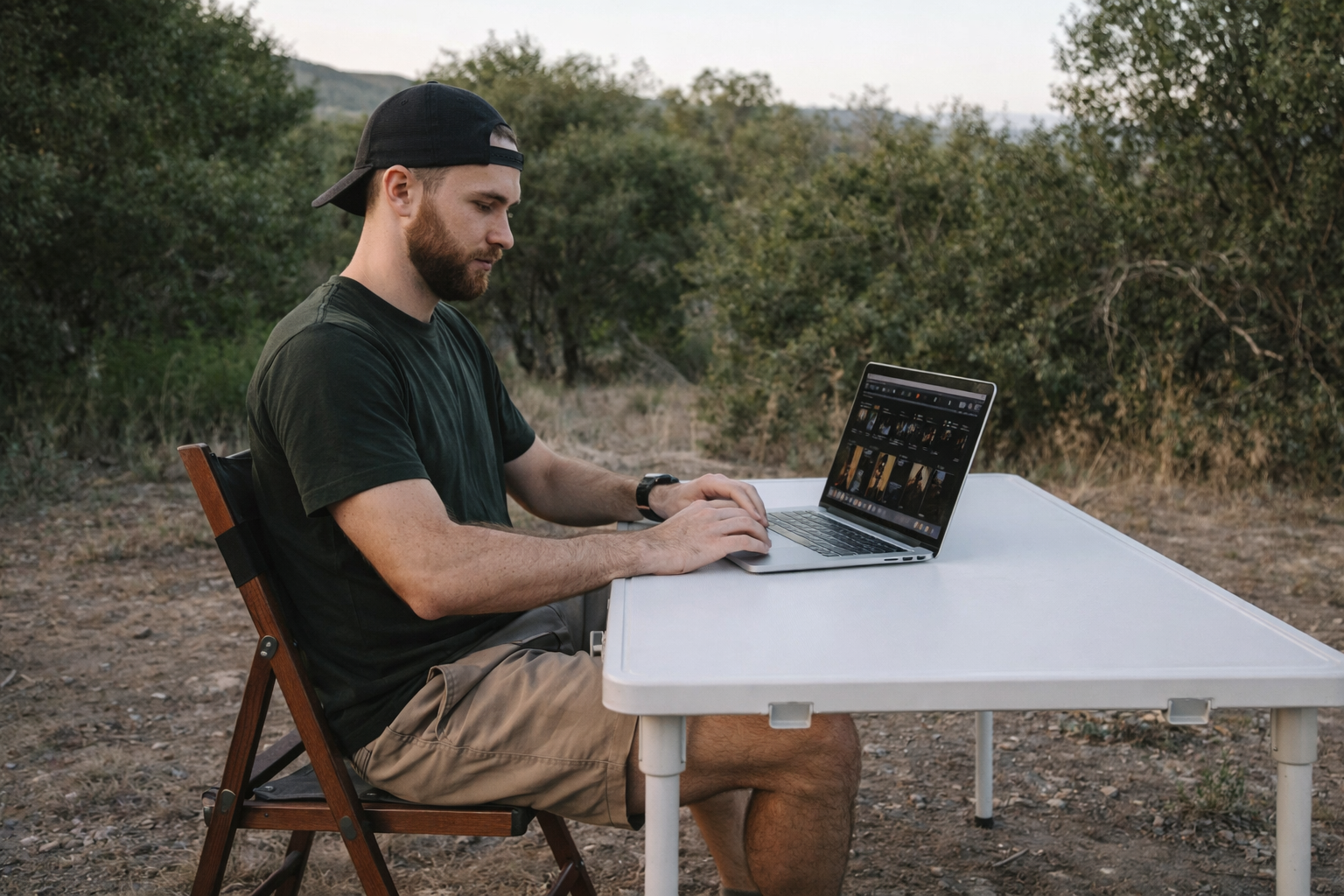
Off-Grid But Fully Charged: My Honest ALLPOWERS PB100 Portable Power Bank Review After a Weekend in the Wild
A weekend outdoors changes the way you judge a power bank. At home, a slow recharge or an awkward cable is a minor annoyance. Away from an outlet, the same details decide whether your phone survives the drive home, whether the camera is ready for the next morning, and whether a laptop can be used for more than a few minutes. That is the setting in which the ALLPOWERS PB100 makes the most sense: it is a high-output power bank for people who want more flexibility than a small phone charger without carrying a full power station.
The PB100 combines a 24,000mAh capacity with up to 100W output and a portable design. Those numbers sound impressive, but they need context. Capacity printed on a battery is not the same as energy available at the USB port, and 100W does not mean that every device will charge at 100W. After looking at the practical parts of the setup, the PB100 comes across as a useful middle ground for short trips, camera bags, remote work, and light camping.
What the ALLPOWERS PB100 Is Really Designed For
The ALLPOWERS PB100 is best understood as a portable charging hub rather than a miniature generator. It is intended to keep USB devices running: phones, tablets, cameras, handheld game systems, GPS units, lights, and compatible laptops. That distinction matters when packing. It can extend the life of your existing electronics, but it is not the right tool for running a kettle, heater, refrigerator, or other mains-powered appliance.
Its strongest selling point is the combination of output and size. A basic travel power bank may be convenient for a phone, but it can become frustrating when a USB-C laptop, tablet, camera battery, and phone all compete for the same small reserve. With a 100W ceiling, the PB100 has more headroom for demanding USB-C devices, while the USB-A connection remains useful for older cables and small accessories.
That makes it particularly appealing for a weekend kit. You can bring one energy source for the devices you actually use instead of several small banks with different charging speeds. The trade-off is that the PB100 is still limited by its internal capacity. High output improves compatibility; it does not create extra energy.
PB100 Specifications in Everyday Language
| Specification | What it means in practice |
|---|---|
| Capacity | 24,000mAh is a substantial reserve for phones, tablets, cameras, and other USB equipment. |
| Maximum output | Up to 100W gives compatible USB-C equipment a chance to charge at a useful speed instead of merely slowing the battery drain. |
| Connections | USB-C and USB-A support a mix of newer fast-charge cables and older accessories. |
| Protection | Built-in protection is intended to help guard against overcharging, overheating, and short circuits. |
| Solar use | The PB100 can be paired with a compatible solar panel, but solar charging depends heavily on light, panel position, and the panel’s actual output. |
| Ideal role | A portable reserve for short trips, commuting, travel, photography, and remote work with USB-powered equipment. |
What a 24,000mAh Battery Gives You
Battery capacity is often presented in milliamp-hours because that is familiar from phone accessories. The more useful comparison for mixed devices is watt-hours. A 24,000mAh power bank typically represents roughly 89Wh at the battery’s nominal voltage before conversion losses. The energy delivered to a device will be lower because the power bank has to regulate voltage, manage heat, and protect the cells.
In other words, do not plan a trip by dividing 24,000 by the capacity printed on your phone. A phone may get several meaningful recharges, but the exact number changes with battery size, charging efficiency, cable quality, temperature, and whether the phone is being used while it charges. A laptop can consume a large part of the reserve in a single session, especially if it is doing heavy work or charging from a low battery.
The PB100 is most effective when used to top up devices before they reach empty. Keeping a phone between roughly 30 and 80 percent gives you more flexibility than waiting for a shutdown and then trying to recover every device at once. It also makes it easier to stop charging when you have enough power for the next leg of the trip.
My Weekend Packing Test: Where It Earns Its Space
For a short outdoor trip, I would pack the PB100 with one USB-C cable, one USB-A cable, a short cable for the phone, and a small cable for the camera or headlamp. The power bank is then treated as a shared reserve rather than a charger that stays attached to one device all day. That simple change makes the capacity go further because each device gets a sensible top-up instead of a full charge when it does not need one.
The phone is usually the first priority. Navigation, photos, weather checks, messages, and emergency calls can drain a phone much faster than a relaxed day at home. The PB100 is a good match for this situation because it can supply power while the phone is still being used. Keep the bank in a dry, accessible pocket rather than at the bottom of a pack, and you can add charge during a lunch stop without unpacking the whole kit.
The second test is camera equipment. A mirrorless camera, action camera, drone controller, or rechargeable headlamp may not need a high-wattage connection, but several small batteries add up over a weekend. USB-A compatibility is helpful here because many older charging leads still use it. It is worth checking each device before leaving: some proprietary battery chargers draw very little, while a laptop-style USB-C device may demand considerably more.
For remote work, the PB100 can keep a compatible USB-C laptop alive for a short session, but expectations should stay realistic. It is a way to finish a document, join a brief call, or download files when the internal laptop battery is low. It is not a replacement for a large power station if you need to work for a full day or run a monitor and peripherals at the same time.
Charging a Laptop: The 100W Number Needs a Closer Look
The PB100’s 100W output is valuable only when the laptop, cable, and charging protocol all agree. A USB-C laptop that accepts power delivery may charge from the bank, but it may draw less than 100W because of its own limits. Some computers also reduce their charging speed while they are under heavy load. If the laptop uses a barrel connector or a proprietary charger, a USB power bank may not be compatible without a suitable converter, and improvised adapters are not a good experiment in the field.
Use a short, good-quality USB-C cable rated for the power you expect to draw. If the laptop shows a slow-charger warning, that is useful information rather than a fault to ignore. Close demanding applications, lower the screen brightness, and charge during lighter work. The PB100 will be much more useful as a battery extender when the laptop is not simultaneously rendering video, running a game, or powering a large external display.
Tablets are a more comfortable match. They usually need less power than a laptop and can receive a meaningful charge without consuming the entire reserve. The same is true of phones, e-readers, GPS devices, and camera accessories. The best use of the 100W ceiling is not to force every device to charge at maximum speed; it is to make the bank flexible enough for the devices already in your bag.
Port Selection and Cable Discipline
A power bank can have excellent electronics and still disappoint if the cables are wrong. USB-C is the connection to reach for when a device supports faster charging, but the cable must also be designed for the intended power. Older USB-A cables are perfectly useful for lights, headphones, small cameras, and backup accessories, but they should not be assumed to deliver the same performance as a suitable USB-C setup.
I would label the cables before a trip instead of throwing a handful into one pocket. One cable for the phone, one for the laptop or tablet, and one for small accessories is enough for most weekend kits. A spare cable is sensible, but a collection of unmarked leads adds confusion when the light is fading and a device is already low.
Charge the PB100 fully, test every cable, and confirm which devices accept USB-C power.
Keep the bank dry, shaded, and off the cold ground while it is charging or powering equipment.
Top up navigation and communication devices before they reach a critical level.
Disconnect cables, check the remaining charge, and avoid storing the bank under pressure or loose metal objects.
Solar Charging: Useful Backup, Not Instant Energy
Solar compatibility adds an interesting option for camping, but it should be treated as a slow replenishment method rather than a guarantee of unlimited power. A panel’s advertised wattage is a best-case figure. Clouds, shade, heat, the angle of the panel, dust, and the charging input accepted by the power bank all affect the result.
For a weekend, the sensible plan is to arrive with the PB100 charged and use solar to stretch the reserve if the weather cooperates. Put the panel where it gets direct sun, move it as the sun changes, and keep the power bank protected in a shaded place. Charging a battery in direct heat can be less comfortable for the electronics than charging it in a cooler position with the panel connected by a longer cable.
If reliable solar recovery is central to your trip, compare the panel and the power bank as a system. A panel that works well with a large power station is not automatically the best match for a compact USB power bank. Cable compatibility and input limits matter just as much as the panel’s headline wattage.
PB100 Compared With a Portable Power Station
The PB100 sits at the small end of the ALLPOWERS outdoor-power range. That is an advantage when every pound in a backpack matters, but it also defines the limits. The S200 and R600 are more suitable when you need AC output, a larger reserve, or the ability to support several kinds of equipment. They are not necessarily better for every trip; they are simply different tools.
| Model | Capacity and output | Best fit | Trade-off |
|---|---|---|---|
| PB100 | 24,000mAh, up to 100W | Phones, tablets, cameras, USB lights, and a short laptop top-up | USB-focused; not intended for AC appliances |
| S200 | 154Wh, 200W | Small camping setups that need more headroom and AC, USB-C, and USB-A options | Heavier and less pocket-friendly than a power bank |
| R600 | 299Wh, 600W | Base camp, emergency backup, small appliances, and longer stays away from outlets | Portable, but it belongs in a vehicle or at camp rather than a day pack |
My choice for a walking trip would be the PB100 because its job is clear and its size is easier to live with. If I were driving to a campsite, bringing a cooler, or planning to use a laptop, lights, and small appliances together, I would look at the S200 or R600 instead. The mistake is not choosing the smaller unit; it is asking a small unit to behave like a generator.
When the R600 Makes More Sense
The R600 is a different class of product. Its 600W output and 299Wh capacity are aimed at a campsite, vehicle, workshop, or emergency shelf rather than a pocket. It can support a broader set of equipment, including AC devices, and its display makes it easier to see what is happening with the remaining reserve. For a base camp, that extra visibility and capacity can be worth the additional weight.
It is also a better choice when a trip includes several people. A family may need phones, a camera, lights, a small fan, and a laptop at the same time. The PB100 can handle a surprising amount for its size, but a shared power source has different requirements from a personal backup bank. The R600 gives the group more breathing room.
For a solo hiker who only needs USB charging, however, the R600 may be unnecessary luggage. Capacity should match the route and the equipment, not the biggest number available. A smaller battery that stays in the pack is often more useful than a larger one left at home because it is too heavy to carry.
Cold Weather, Moisture, and Storage
Lithium batteries do not perform at their best when they are very cold. A chilled power bank may charge more slowly or appear to lose capacity temporarily. Keep the PB100 inside the pack or a protected pocket overnight, and let it warm gradually before connecting it to a demanding device. Do not heat it directly against a stove, fire, or other hot surface.
Moisture is another concern in the outdoors. The PB100 should be protected from rain, condensation, wet clothing, and sandy ground. A simple dry bag or zip pouch is more useful than a complicated accessory. Before connecting a cable, check that the port is clean and dry. A power bank is portable, but it is not automatically weatherproof just because it is intended for travel.
For storage between trips, leave the battery in a cool, dry place and avoid keeping it completely empty for months. Do not place keys, coins, or loose metal objects in the same pocket as the ports. A little organization prevents the kind of damage that no charging speed can fix.
What I Like About the PB100
- The 100W output gives it a real use case beyond emergency phone charging.
- 24,000mAh is a useful reserve for a weekend when the load is mostly USB devices.
- USB-C and USB-A make it easier to support both newer and older accessories.
- Its portable format suits a backpack, camera bag, commuter bag, or carry-on better than a power station.
- Solar compatibility gives campers another way to extend the reserve when conditions are favorable.
- Protection features are reassuring when several personal devices are being charged during a trip.
Where the PB100 Falls Short
- The printed 24,000mAh capacity does not translate directly into the same amount of usable energy at the ports.
- A 100W maximum does not mean every laptop will accept 100W or charge quickly while under heavy load.
- It cannot replace an AC power station for appliances, extended remote work, or a group campsite.
- Solar charging is weather-dependent and needs realistic expectations about recovery speed.
- Port and cable compatibility still need to be checked before a trip, especially for laptops and camera gear.
Who Should Buy the ALLPOWERS PB100?
The PB100 is a good fit for someone who spends weekends traveling, camping, photographing, commuting, or working away from a wall outlet. It is also useful as a home backup for phones and other small electronics during a short outage. The 100W output makes it more versatile than a basic phone-only power bank, while the 24,000mAh capacity keeps it within the practical range of personal gear.
I would choose it when the important devices are USB-powered and portability matters. I would not choose it as the only power source for a long off-grid stay, a van conversion, or a campsite built around AC appliances. For those situations, the S200 or R600 is a more sensible starting point.
Questions That Come Up Before a Trip
Can the PB100 charge a laptop?
It can charge compatible USB-C laptops, provided the laptop, cable, and charging protocol support the required input. Check the laptop’s charger specifications before relying on it in the field.
Is 24,000mAh enough for a weekend?
For one person using a phone, camera accessories, lights, and occasional tablet charging, it can be a useful weekend reserve. Heavy laptop use, cold weather, and multiple people will reduce the margin quickly.
Can it run a refrigerator or heater?
No. The PB100 is a USB-focused power bank. Appliances that require AC output need a portable power station with suitable wattage and capacity.
Does solar make it unlimited?
No. A compatible panel can help replenish the battery, but cloud cover, shade, heat, panel position, and charging limits all affect how much energy reaches the bank.
How should I store it between trips?
Keep it dry, cool, protected from metal objects, and away from direct heat. Check its charge before a trip and inspect the cables and ports before connecting a device.
Before choosing between the PB100 and a larger ALLPOWERS station, compare the current models, availability, and any active offers on the ALLPOWERS coupons and deals page. It is worth checking the live options against the equipment you actually plan to carry.