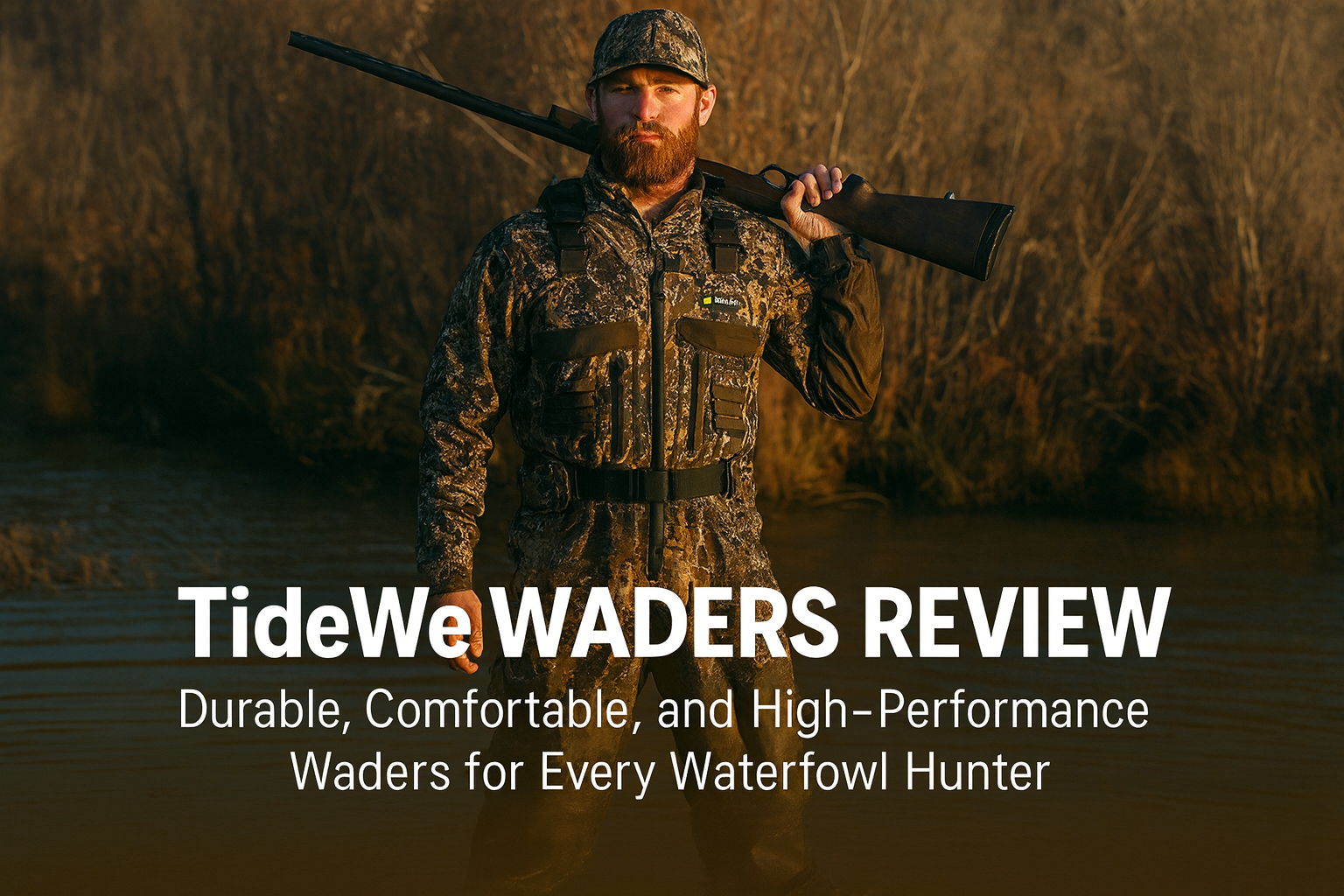
TideWe Waders Review: Durable, Comfortable, and High-Performance Waders for Every Waterfowl Hunter
A good pair of waders changes the character of a wet-weather hunt. Instead of treating cold water, mud, reeds, and long waits as obstacles to endure, you can concentrate on movement, concealment, and staying in the right place long enough for the conditions to work in your favor. TideWe waders cover several different approaches to that problem, from lightweight breathable designs to insulated neoprene and zip-front models.
The interesting part of choosing TideWe waders is that there is no single “best” version for every hunter. A warm insulated bootfoot pair may be ideal for a freezing morning in a blind, while a lighter waist-high design can be more comfortable for warmer weather or shallow water. This review looks at the practical differences, the fit details that matter in the field, and the compromises behind each style.
What A Pair Of Hunting Waders Has To Do Well
Waders have a demanding job. They need to keep water out, allow enough movement for walking and kneeling, survive contact with brush and rough banks, and remain comfortable when worn over base layers or hunting clothes. A pair can be technically waterproof and still be frustrating if the chest is too tight, the inseam restricts a step, or the boots do not match the terrain.
For waterfowl hunting, the most useful features are rarely the ones that look impressive in a product title. Seam construction, boot fit, suspenders, pocket placement, and the ability to layer underneath often decide whether the waders feel dependable after several hours. A good buying decision starts with the environment and the way you move through it, then works backward to insulation and material.
Breathable Versus Neoprene Waders
Breathable waders are usually the more versatile choice across changing temperatures. They are designed to let some moisture vapor escape while keeping outside water from reaching the clothing underneath. That does not mean they stay cool in every situation. Walking hard in a breathable chest wader can still create heat, but the fabric is generally easier to live with during long active days than thick neoprene.
Neoprene waders hold onto more warmth and can feel reassuring in very cold water. They are often a good fit for hunters who spend long periods standing still, particularly when paired with warm base layers and insulated boots. The tradeoff is weight and bulk. A thick pair can become tiring during a long approach and may feel too warm when the weather is mild.
| Wader type | Best match | Main strength | Tradeoff |
|---|---|---|---|
| Breathable chest waders | Variable weather, long walks, active hunting | Better moisture management and layering flexibility | Need thoughtful layering in freezing conditions |
| Insulated neoprene chest waders | Cold water, stationary hunts, late-season conditions | Warmth and a protective, substantial feel | Heavier and warmer during long walks or mild weather |
| Waist-high waders | Shallow water, warm weather, easier movement | Less coverage and bulk around the upper body | Not a substitute for chest waders in deep water |
| Zip-front waders | Hunters who value easier entry and exit | Convenience when changing layers or answering nature’s call | More hardware to inspect and keep clean |
QuestWade Elite: The Comfort And Access Option
The QuestWade Elite line is aimed at hunters who want breathable coverage without giving up convenience. The zip-front design is more than a small luxury. It can make a real difference when the waders need to be put on over several layers, when a hunter is travelling to a blind, or when the day involves repeated stops and starts.
The important fit question is whether the front zipper and chest construction leave enough room to move without pulling across the shoulders. A wader should allow a high step, a crouch, and a careful climb up a muddy bank without the fabric feeling stretched to its limit. The available QuestWade models are a useful starting point for comparing a feature-rich breathable option with simpler chest waders.
When A Front Zip Is Worth It
A front zip is especially helpful for hunters who wear bulky insulation underneath or who dislike wrestling with suspenders and a tight opening at the end of a long day. It also makes ventilation easier during a walk, provided the weather and water conditions allow it. The zipper should be treated as a maintenance item: keep grit out of the teeth, close it gently, and follow the manufacturer’s care guidance instead of forcing it when mud or fabric is in the way.
DeepWade: For Breathable Coverage And Long Days
DeepWade models make sense for hunters who want a breathable chest wader with a more substantial feature set. A zip-front or higher-access design can reduce the hassle of getting dressed, while bootfoot construction keeps the outfit simple when the boots are suitable for the ground. This style is often attractive for waterfowl hunters who walk some distance before settling into a position.
Large size ranges and generous layering space are useful, but “roomy” should not be confused with “well fitted.” Excess fabric can catch on brush, rub at the knees, or make the boot feel less stable. Take measurements while wearing the layers you expect to use. Pay particular attention to chest circumference, inseam, and boot size rather than choosing only by regular clothing size.
One of the best practical tests is to move through the motions you will use in the field. Step over a low obstacle, bend at the knees, sit briefly, and reach forward as if handling a shotgun or decoys. If the waders pull hard at the seat or shoulders during those movements, the problem will become more noticeable after hours outside.
Insulated Neoprene: Warmth Without Guesswork
Insulated neoprene waders are built around a different priority: staying warm when the water and air are cold. The material feels thicker and less airy than a breathable shell, but that extra insulation can be welcome when a hunter is standing still at the edge of a marsh. Boot insulation matters just as much as the upper material. Cold feet can end a hunt long before the rest of the body feels uncomfortable.
The Seeker Pro models are a practical example of the warmer neoprene direction. They are better suited to cold-season use than to a warm early-season walk. A good pair should leave enough space for socks and normal movement without allowing the foot to slide inside the boot. If the boot is too large, the extra space may feel warm at first but can reduce stability and create friction.
Women’s Fit: Why The MarshQueen Shape Matters
Women’s waders should not be treated as a smaller version of a men’s pattern. The relationship between chest, waist, hip, inseam, and boot size affects comfort and mobility, especially when the waders are worn over cold-weather clothing. A good fit should allow a full step and a stable crouch without excessive material bunching at the waist or pulling at the shoulders.
The MarshQueen line gives women a more appropriate starting point for comparing chest waders intended for waterfowl conditions. The practical questions remain the same: Can the suspenders be adjusted without digging in? Is there enough space for the planned base layer? Does the boot feel secure while walking on soft ground? Those questions are more useful than relying on a generic “true to size” claim.
Waist-High Waders For Lighter Coverage
Waist-high waders are appealing because they feel less restrictive. They can be a good choice for shallow water, warm weather, short approaches, and situations where chest-level coverage is unnecessary. LightWade models are particularly relevant for hunters who want waterproof lower-body protection without wearing a full bib over the torso.
The limitation is obvious but important: waist-high waders offer less protection if water becomes deeper than expected or a route changes unexpectedly. They also provide less insulation around the upper body. Treat them as a deliberate tool for the right conditions, not as a lighter replacement for chest waders in every hunt.
Bootfoot Construction And Traction
Bootfoot waders keep the outfit straightforward because the boot is already attached. That is convenient when changing quickly or when a hunter wants fewer pieces to pack. The downside is that the boot fit cannot be adjusted independently from the wader. If the upper fits perfectly but the boot is too narrow, too loose, or poorly suited to the terrain, the whole setup will still feel wrong.
Look for a sole that matches the ground where you hunt. Mud, slick banks, gravel, and submerged roots each place different demands on traction. No sole is perfect everywhere, so check local regulations and landowner rules before choosing felt or other specialty soles. Keep in mind that traction is only one part of stability; a careful pace and a secure footing matter more than a product label.
Fit And Layering Checklist
Use the chest, waist, inseam, and boot measurements that reflect the clothes you will actually wear underneath.
Walk, crouch, step over an obstacle, sit, and reach forward before deciding that the fit is comfortable.
They should hold the waders securely without creating pressure points or slipping from the shoulder.
Confirm that the foot stays stable, socks fit comfortably, and the sole matches mud, gravel, or bank conditions.
How To Check Waders Before The First Hunt
Do not wait until the first cold morning to discover a problem. Inspect the seams, zipper, pocket closures, suspenders, belt loops, and boot connection in good light. If the manufacturer provides a leak-test method, follow it. A controlled test at home is much easier to diagnose than a wet spot that appears after a long walk through reeds.
Pack the waders in a way that avoids sharp objects pressing against the fabric. Keep a basic repair kit available for field use, but do not assume a patch is a permanent answer to a damaged seam or boot connection. After a test or hunt, rinse away mud and grit, then dry the waders completely before storage.
Care And Storage That Extend Their Life
Rinse waders with clean water after exposure to mud, salt, or vegetation. Hang or lay them in a shaded, ventilated area and allow the inside to dry as well as the outside. Direct high heat can damage coatings, glue, rubber, or boot materials, so a heater or hot dryer is usually a poor shortcut.
Store the waders away from fuel, solvents, sharp tools, and rodents. Do not leave them folded wet in a truck or sealed bag for several days. Before the next season, check the seams and boots again, test the zipper, and look for small abrasions around the knees and seat. Small repairs are easier before a pinhole becomes a soaked base layer.
TideWe Waders Compared By Use Case
| Use case | Most sensible direction | Why | What not to overlook |
|---|---|---|---|
| Cold, stationary waterfowl hunt | Insulated neoprene such as Seeker Pro | Warmth is more important than the lightest possible walk | Boot fit, sock room, and safe movement in bulky clothing |
| Long approach to a blind | Breathable DeepWade or QuestWade | Lower heat buildup and easier movement over distance | Layering for the temperature once you stop moving |
| Warm shallow-water outing | LightWade waist-high design | Less coverage and less bulk where chest protection is unnecessary | Water depth, upper-body weather protection, and route changes |
| Women’s waterfowl fit | MarshQueen women’s chest waders | Starts with a shape designed around women’s proportions | Hip, chest, inseam, and boot measurements together |
Final Verdict
TideWe waders are best understood as a broad family rather than one universal model. The breathable QuestWade and DeepWade options are attractive for active hunters and changing conditions. Seeker Pro makes more sense when warmth and insulated boot comfort come first. MarshQueen gives women a more relevant fit starting point, while LightWade is useful when waist-high coverage is enough.
The right choice depends on the coldest part of the day, the distance you walk, the depth and speed of the water, and the clothing you need underneath. Before buying, compare current TideWe products, sizes, coupons, and available offers on the TideWe coupons and deals page.
Common Questions
Are TideWe waders good for waterfowl hunting?
They can be a good match when the model suits the conditions. Choose breathable waders for active or variable-weather use and insulated neoprene when cold-water warmth is the main priority.
Are breathable waders warmer than neoprene waders?
Usually not by themselves. Breathable waders are more adaptable for layering, while neoprene provides more built-in insulation and is often better suited to cold, stationary hunts.
Should I choose chest waders or waist-high waders?
Choose chest waders when water depth or changing conditions require more coverage. Waist-high waders can be more comfortable for shallow water and warmer weather but offer less protection if conditions change.
How should hunting waders fit?
They should allow a full range of motion and enough room for the layers you will wear, while the suspenders and boots remain stable. Do not choose only by ordinary clothing size.
How do I keep waders from leaking?
Rinse away grit, dry them fully, avoid excessive heat, inspect seams and zipper areas, and repair small abrasions before they grow. Follow the manufacturer’s care and leak-test instructions.
Are bootfoot waders better than stockingfoot waders?
Bootfoot waders are simpler and faster to put on, while stockingfoot waders allow a separate choice of boots and can provide a more customizable fit. The better option depends on terrain, storage, and how much flexibility you want.